
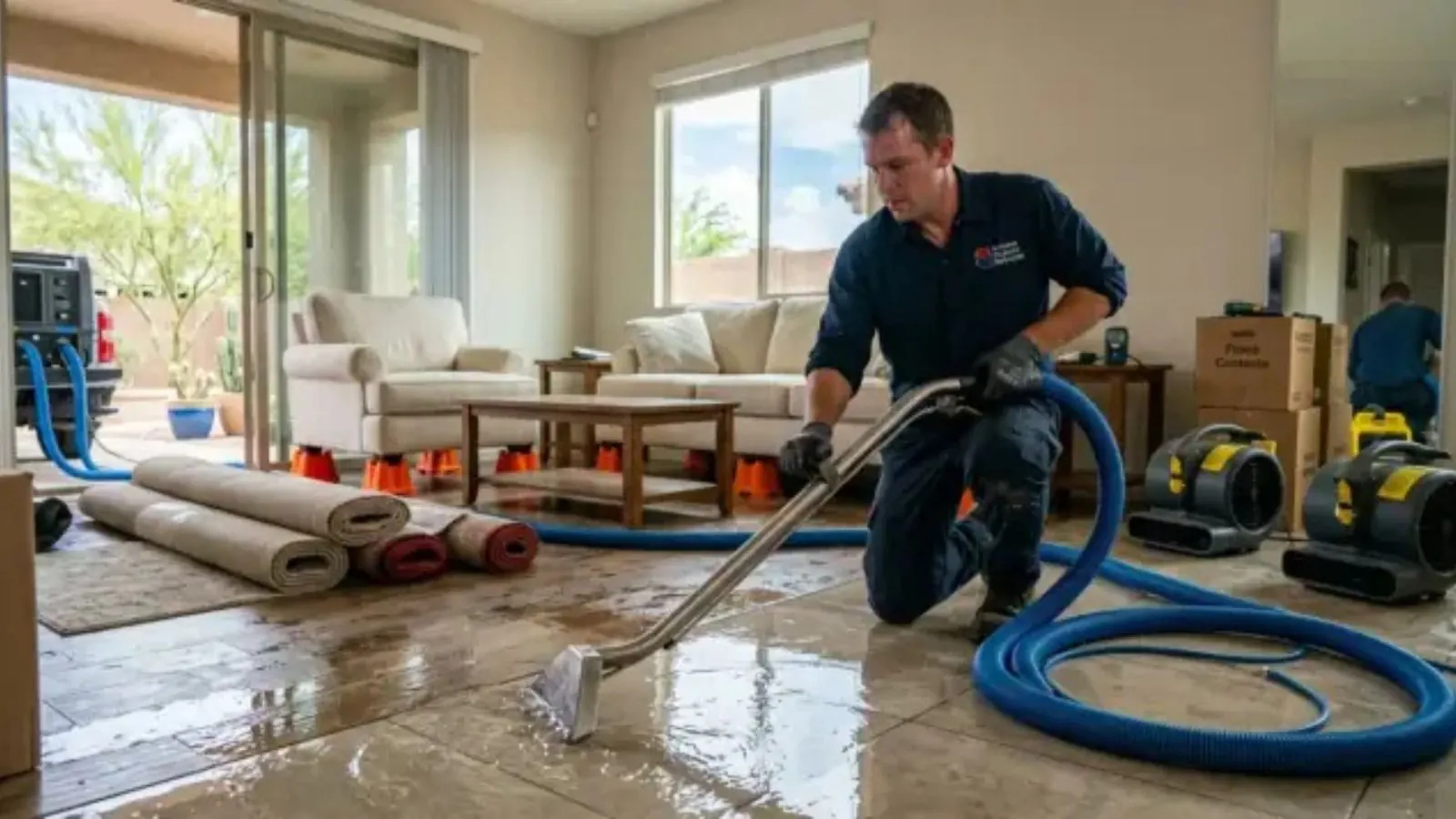
Water Damage Restoration in Orem, UT
A 24/7 dispatch line for burst pipes, flooded basements, sewage backups and wet walls, with licensed and insured restoration professionals sent to your door.
- Licensed and insured
- Scope and price explained before work starts
- Same-day response when available
At a glance
What water damage restoration involves in Orem
Water damage restoration is the work of stopping a water source, removing standing water, drying wet building materials, cleaning and sanitizing the affected rooms, and rebuilding what could not be saved. If you are dealing with water damage in Orem, UT, the first day matters most, because wet drywall, carpet pad and subfloor begin to break down fast. 247 Orem Water Damage Restoration is a 24/7 dispatch for licensed and insured restoration professionals serving Orem and the towns around it.
Most jobs move through four stages. Mitigation stops the loss from growing. Cleanup pulls out debris and contaminated materials. Structural drying brings wood, concrete and drywall back to a safe moisture level. Repair then replaces drywall, flooring, trim and paint. Each stage has its own page on this site, and the sections below show how they fit together.
The water that reaches Orem buildings comes from a short list of sources. Supply lines fail, water heaters rust through, sinks overflow, roofs leak, and winter freezes split pipes. The response is similar every time. Find the wet material before it spreads, pull the water out, and dry the structure with equipment you can measure instead of guessing.
Water damage services we dispatch in Orem
Pick the card that matches where you are right now. If you are not sure, call and the dispatcher will sort it out with you.
Water damage repair
Water damage repair starts once the structure is dry. Crews replace drywall, insulation, baseboard, flooring and cabinets, then prime and paint so the room matches again. This is the rebuild stage, and it follows drying.
Water mitigation
Water mitigation covers the first 24 to 72 hours. It means shutting off the source, starting extraction, mapping moisture and setting air movers and dehumidifiers before wet materials give up.
Water damage cleanup
Once the leak is stopped, water damage cleanup removes soaked debris and contaminated materials, sanitizes surfaces, deodorizes the rooms and sorts which belongings can be saved.
Emergency water removal
When water is standing on the floor, emergency water removal puts pumps and extraction units to work immediately. It is the fastest way to limit what soaks into the carpet, pad and walls.
Flood damage restoration
Storm runoff, snowmelt, river overflow and groundwater are handled under flood damage restoration. These jobs involve Category 2 and 3 water, so safety and disposal rules come first.
Mold remediation
Mold is our secondary service. Mold remediation uses containment barriers, negative air and HEPA air scrubbers after the moisture problem has been found and fixed.
Active Water or Mold Problem?
Dispatch is answered 24 hours a day, every day of the year.
How a water damage job runs from the first call
Call and triage
You reach the 24/7 line and the dispatcher asks where the water is coming from, how far it has spread, and whether anyone has seen sewage, sagging ceilings or a gas smell. Electrical and gas risks go to 911 or the utility first. Then the dispatcher sends licensed and insured restoration professionals and tells you what to do while you wait.
Stop the source
The crew shuts the fixture valve, the water heater supply or the main valve. If the break is on the city side of the meter, you call the city water line instead, because the crew cannot work on the utility's pipe.
Extract the standing water
Submersible pumps handle deep water. Truck-mounted and portable extraction units pull water out of carpet, pad and hard floors. Every gallon removed this way is a gallon the air movers do not have to evaporate.
Map the moisture
Moisture meters read drywall, framing and subfloor. Thermal imaging cameras show cold, wet patches behind finished walls and under flooring. The crew marks the wet boundary and takes baseline readings to compare against later.
Dry the structure
Air movers push dry air across wet surfaces while LGR (low grain refrigerant) dehumidifiers pull moisture out of the air. Crews return to check readings. Drying usually takes days, not hours, and depends on the materials involved.
Clean, sanitize and hand off to repair
Surfaces get cleaned and treated with antimicrobial products. HEPA air scrubbers run where dust or contamination was disturbed. When readings reach the dry standard, the job moves to rebuild work.
Why Orem buildings take on water
Orem was incorporated in 1919, largely to build a municipal water system, and the city still runs its own culinary water through the Water Section of Public Works. About 23,530 connections draw from nine deep wells, two mountain springs and treated Provo River water. The system is old civic infrastructure, so ask about the age of your service line and learn where your main shutoff and the city meter sit before something breaks.
The Provo River is the main flood concern. Runoff from the Dry Canyon drainage northeast of Orem and Lindon is directed to a detention basin near the Dry Canyon trailhead. In the high-runoff spring of 2023, Orem Public Works kept nearly 5,000 sandbags available and served residents next to the river first. Clear gutters and storm drains, aim downspouts and sump pump discharge away from the foundation, and sign up for alerts at alerts.utahcounty.gov.
Freezing nights from late fall into spring split pipes in unheated garages, crawl spaces and hose bibs. Near Utah Valley University and along State Street (US 89), many buildings are rentals, where one failed supply line can wet several rooms. If you rent, tell your landlord the moment you see water and photograph everything before anything is moved.
Summer brings its own failures. AC condensate lines clog and back up into closets and ceilings, washer valves let go, and sump pumps quit during the heaviest runoff. Window wells fill and push water along basement walls. Replace rubber washer hoses with braided ones, flush condensate lines at the start of the cooling season, and test the sump pump before the spring melt.
Symptom to solution guide
Use this table when you can see a problem but are not sure what it means. It does not replace a moisture reading, but it points you to the right first move.
| What you see | Likely cause | First move |
|---|---|---|
| Wet or stained wall that feels cool | Pinhole supply leak or drain leak inside the wall | Shut off water to that fixture and call for moisture mapping |
| Ceiling stain or bulge | Roof leak, upstairs fixture leak or AC condensate overflow | Stop the source, keep people out from under the bulge, call for extraction and drying |
| Carpet squishes underfoot | Standing water soaked the pad | Call for extraction before the pad and subfloor stay wet |
| Hardwood edges curl upward | Moisture absorbed from below or from a past spill | Keep the room ventilated and call for moisture readings before sanding |
| Musty smell with no visible water | Hidden wet insulation, wall cavity or crawl space | Find the moisture first, then ask about thermal imaging |
| Water in a floor drain or toilet | Sewer backup | Stay out, avoid contact, call for Category 3 cleanup |
| Basement wall sweats or seeps | Window well, grading or sump pump problem | Check pump and downspouts, call for extraction if water pools |
Water categories and what the crew does about each
Restoration professionals sort water by contamination level, a system used in the ANSI/IICRC S500 standard for water damage restoration. The category decides what can be dried in place and what must be removed.
| Category | What it is | What the crew does |
|---|---|---|
| Category 1 | Clean water from a supply line, tub overflow or broken water heater | Extracts, dries in place and saves most materials if acted on quickly |
| Category 2 | Gray water from a washer, dishwasher or sump overflow | Extracts, cleans, removes porous materials like carpet pad, treats with antimicrobial |
| Category 3 | Sewage, river or storm flood water | Removes porous materials, cuts out affected drywall, disinfects, dries and clears with air scrubbers |
Clean water does not stay clean forever. Category 1 water left sitting for a couple of days can pick up bacteria from the materials it soaks, which is one reason the first day matters so much.
What drives the cost of a water damage job
No honest number can be given without seeing the room. These are the factors that move a job from small to large.
Area and volume affected
A single wet bathroom wall and a flooded finished basement are different jobs. More wet square footage means more extraction, more air movers and more drying days.
Water category
Sewage and flood water call for removal and disinfecting instead of drying in place, which adds labor and disposal.
Materials that got wet
Hardwood, plaster, insulation and carpet pad react very differently. Some can be dried, others have to be cut out and replaced.
Time before drying starts
Water that sits for days spreads into framing and sub-flooring. Early response usually keeps the scope smaller.
Access and equipment days
Crawl spaces, finished ceilings and crowded rooms make drying harder. Equipment stays on site until readings come back dry, so the count of days affects the total.
Insurance depends on how the damage happened. Sudden and accidental water damage, like a burst pipe, is often covered, while gradual leaks and neglect often are not. Flood damage is usually excluded from standard homeowners policies and needs separate flood coverage, so check your policy or ask your insurer.
To get a real figure for your property, call the line and describe the situation. The dispatcher will explain the next step.
Want your real number? Call the 24/7 line and the dispatcher explains the scope and the price before any work starts.
☎ Call (385) 988-9410ZIP codes we cover in Orem
The 24/7 line takes calls for all three Orem ZIP codes, 84057, 84058 and 84097. Our business address is 560 S State St, Orem, UT 84058, on the same State Street that runs through the middle of the city. If you are close to Utah Valley University, Timpanogos Regional Hospital, University Place or the Orem Utah Temple area off South Geneva Road, you are in the service area.
Nearby towns we serve
Orem is contiguous with Provo to the south and Lindon to the north, and the same crews cover both. See the pages for Provo and Lindon for local details. Vineyard sits about 3 miles west of Orem near Utah Lake, and the Vineyard page covers its newer homes.
Farther north, the dispatch line also covers Pleasant Grove and American Fork. If your town is not listed, call anyway, and the dispatcher will tell you whether crews can reach you. The full list is on the service area page.
Mold is a secondary service, and it starts with moisture
Mold needs moisture, so the first question after any water event is whether everything dried completely. If a wall, carpet or ceiling stayed damp, mold can start to grow there. Crews that handle it work to the ANSI/IICRC S520 standard for mold remediation, using containment barriers with negative air so spores are not spread to clean rooms.
Health questions about mold belong to a physician, not a restoration crew. Whether Utah licenses mold work is worth asking, along with what the company can show you. When the problem is already visible, the mold remediation page explains the process.
Documenting a large loss for your insurer
Take wide and close photos of every wet room before furniture is moved. Keep damaged items until your adjuster has seen them or approved disposal. Save receipts for hotel stays, temporary repairs and replacement items.
Ask the crew for the moisture readings, equipment logs and a written scope of work. Those records show what was wet and what was done about it. Your insurer decides what is covered, so ask them directly.
Frequently asked questions
Yes. The line runs 24/7, including holidays, and the dispatcher takes emergency calls at any hour. We offer same-day response when available, though timing depends on crew availability and conditions.
Stop the water if you can do it safely, by closing the fixture valve or the main shutoff. Move valuables to dry areas, lift furniture legs off wet carpet and open cabinet doors to let air in. Stay out of rooms where water touches outlets or sewage, and call 911 or the utility before calling us if you smell gas or see sparking.
Moisture meters measure what is wet, and thermal imaging cameras show moisture behind walls. Air movers push air across surfaces, and LGR dehumidifiers remove moisture from the air. Submersible pumps and truck-mounted or portable extraction units pull standing water out first, and HEPA air scrubbers clean the air after demolition.
Drying usually takes days, not hours. The time depends on how much water got in, which materials are wet and how humid the weather is. The crew takes readings each visit and removes equipment only when the building reaches its dry standard.
No, we do not offer rentals. Equipment goes out with a crew that places it, reads the moisture and adjusts the setup. Renting a dehumidifier without a moisture map often leaves wet framing behind.
No. Restoration dries and repairs damage after water gets in, while waterproofing keeps water from entering. If your basement leaks repeatedly, ask a waterproofing or foundation contractor about grading, drainage and wall repair.
Some rebuilds do. Orem's Building Safety Division requires permits for work that remodels or repairs a building, with exceptions, and for plumbing, electrical and heating work. Ask Building Safety before walls are opened for repair so you know what applies.
Sudden and accidental damage, such as a burst pipe, is often covered. Gradual leaks and neglect often are not, and flood damage is usually excluded from standard policies. Check your policy or ask your insurer, because coverage depends on the wording.
That is flood damage, and standard homeowners and renters policies do not cover it. A separate flood policy is needed, and National Flood Insurance Program policies usually carry a 30 day waiting period. The flood damage page covers how those jobs are handled.