
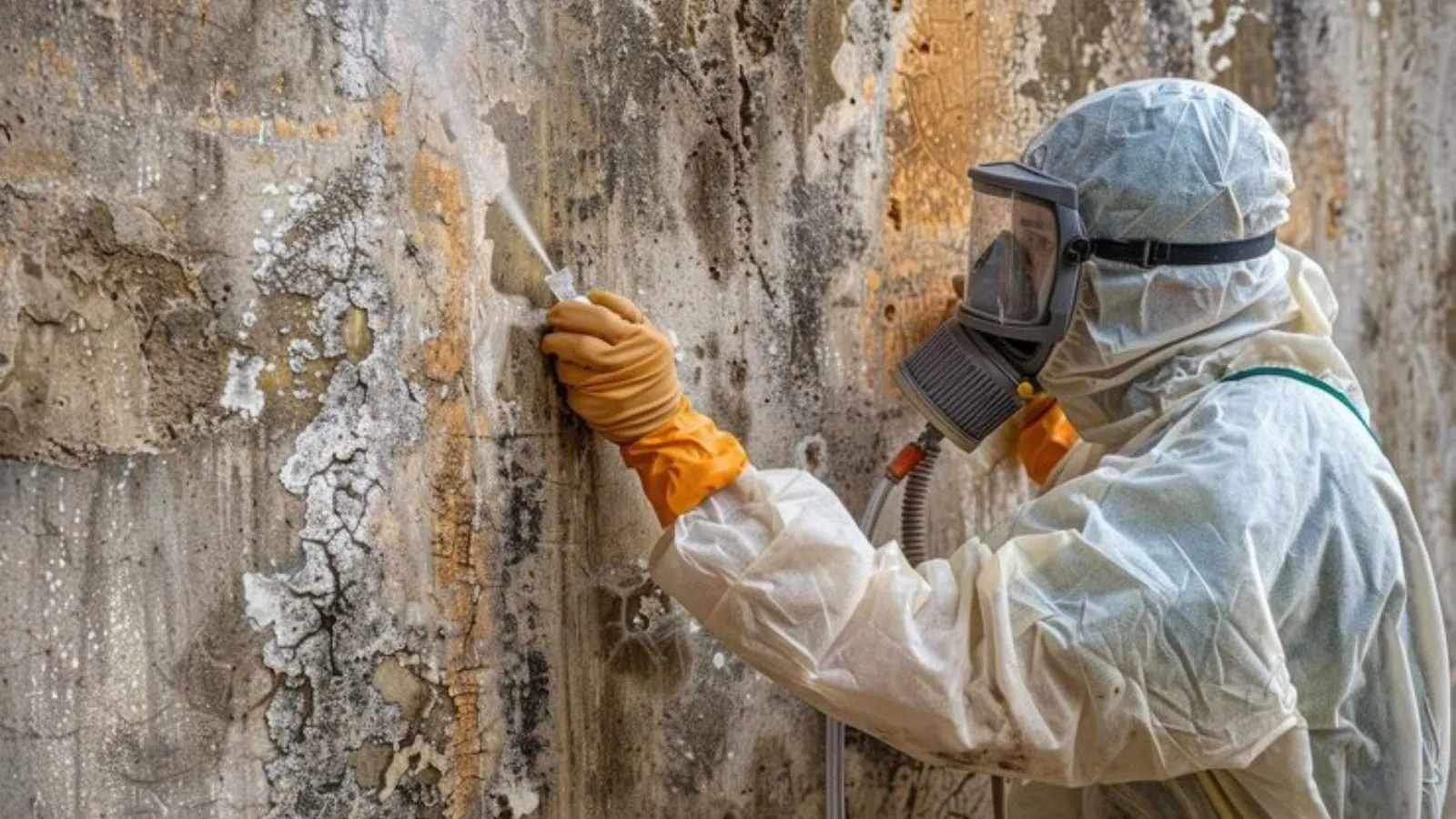
What you are actually cleaning up
Basement mold is a surface growth that needs two things to live. It needs organic material to feed on and moisture to drink. Drywall paper, stored cardboard, carpet pad, and framing lumber all qualify, so a damp basement offers plenty of both.
Many homeowners find it the same way. A musty smell near the stairs, a gray-green patch behind a stored box, or a dark band along the bottom of a finished wall. Before you touch anything, measure the patch and work out where the water came from.
This guide covers a realistic cleanup of a small area, the supplies you need, and the mistakes that spread the problem through the house. It also marks the point where the work belongs to a crew running containment, which is the territory of mold remediation professionals.
Decide first: DIY patch or professional job
A single patch on a hard surface, such as sealed concrete, tile, metal, or painted trim, no bigger than a sheet of paper, with a cause you have already found and fixed, is a reasonable DIY job. Growth on porous materials like drywall, insulation, or carpet needs a closer look, and so does anything larger.
Stop and call if sewage or floodwater was involved, if growth shows inside a wall or ceiling cavity, or if the smell is strong and you cannot find the source. Cutting into a wall without barriers can push dust through every room that shares your air handler.
Materials and tools to gather before you start
- An N95 or better respirator that you have fitted to your face
- Splash goggles without vent holes, plus nitrile or rubber gloves that reach the wrist
- Disposable coveralls, or old clothes you will bag and wash afterward
- Two buckets, a stiff nylon brush, microfiber cloths, dish detergent, and warm water
- 6 mil plastic sheeting, painter's tape, and heavy contractor bags
- A vacuum with a true HEPA filter, since a standard shop vac exhausts fine dust back into the room
- A moisture meter, a box fan, and a dehumidifier sized for a basement
You do not need a fogger, a specialty spray, or a bottle of bleach to do this job. Detergent, scrubbing, and drying are what remove growth from a hard surface.
Step by step: removing a small basement patch
Find and stop the moisture
Check the water heater, washer hookups, sump pit, window wells, and any pipe that sweats in summer. If you cannot name the source, cleaning only buys a short pause. Take moisture meter readings on the stained area and on a dry wall of the same material so you have a target.
Seal off the room
Shut interior doors and tape plastic over doorways and return vents. Turn off the furnace fan so it cannot move air through the ducts. Set a box fan in a basement window blowing outward, with plastic and tape sealing the gaps, so air leaves the house instead of drifting upstairs.
Put your gear on first
Respirator, goggles, gloves, and coveralls go on before you disturb anything. Never dry-brush or dry-scrape a patch. Dry work lofts dust that settles on furniture and in vents.
Bag what cannot be cleaned
Porous items with growth, such as ceiling tile, carpet pad, wet cardboard, and paper-faced drywall, get removed. Mist them lightly, cut small, double bag, and wipe the outside of each bag before carrying it out through the shortest path.
Scrub hard surfaces with detergent
Work on sealed concrete, tile, metal, and painted trim with warm water, detergent, and the nylon brush. Start at the cleanest edge and move toward the center. Rinse the cloth in the second bucket often, because a dirty rinse just spreads the growth.
Vacuum and wipe
Once the surface dries, run the HEPA vacuum over it, then wipe with a damp microfiber cloth and bag the cloth. HEPA filtration holds fine particles that an ordinary vacuum would blow back out.
Dry it completely
Run the dehumidifier and fan until the moisture meter matches your dry reference reading. Concrete and lumber dry slowly, so expect days, not hours.
Clean up and wash
Bag the plastic, cloths, and coveralls. Wash your hands and face, and launder your clothes separately. Leave the outward fan running for a day.
Not sure what you are looking at in your home? Describe it to dispatch.
☎ Call (385) 988-9410Mistakes that make basement mold worse
Painting over it
Paint and primer hide staining but leave both the growth and the moisture underneath. The patch usually shows through again.
Spraying and walking away
A sprayed patch that is never scrubbed or dried stays damp and keeps feeding whatever is on the surface.
Mixing cleaners
Bleach combined with ammonia or an acidic cleaner releases harmful gases. Pick one product, ventilate, and keep the rest in the cabinet.
Opening a wall with no barriers
Cutting drywall without plastic and negative air sends dust into every room. That is a containment job, not a weekend job.
What to photograph and write down
- A wide photo of the room, then close shots of each patch with a tape measure in frame
- Moisture meter readings with the date, location, and material
- The water source, the repair, and the plumber's invoice if there was one
- A short list of what you removed and bagged
- The date you first noticed it and any earlier leaks in the same spot
Keep this record in one folder. An insurer, a buyer, a lender, or a restoration crew may ask for it later, and a clean timeline answers most of their questions.
When it is not a DIY job
Call a professional when growth covers more than a sheet-sized patch, sits on drywall, insulation, or carpet, shows up inside a wall, or comes back after a careful cleaning. A remediation crew builds containment barriers with negative air, runs HEPA air scrubbers, removes the affected materials, and follows the ANSI/IICRC S520 standard published for mold remediation. Ask any company whether its crews work to that standard.
Also ask whether Utah licenses mold work and what the company can show you. If a lender or buyer wants proof the work succeeded, independent clearance testing exists, and it is performed by a party other than the company that did the removal. Questions about whether a symptom relates to your home belong with a physician, not a contractor.
Our dispatch line sends crews to basements in Orem and to nearby towns such as Provo and Pleasant Grove. Calls run around the clock, and the dispatcher will ask about the water source, the size of the area, and the materials involved.
If water caused it, cleanup comes first
When a basement got wet from a pipe, an appliance, or a drain backup, soaked drywall, carpet, and pad should come out before mold becomes the main problem. That removal, sanitizing, and deodorizing work falls under water damage cleanup, and the earlier it starts the smaller the mold job tends to be.
Ask the crew to map moisture with a thermal imaging camera and a moisture meter so hidden wet spots behind baseboards do not get left behind. Air movers and LGR dehumidifiers then dry the structure, and the readings tell you when the job is done.
What Orem homeowners should know
Orem incorporated in 1919, largely to build a city water system, and its first major act was a bond issue for that purpose. The network is old civic infrastructure, so if one basement wall stays damp near where the service line enters, ask the city and a plumber about the age and condition of that line before you blame condensation.
The Orem Building Safety Division says permits apply to work that remodels or repairs, with exceptions, and to plumbing, electrical, heating, or air-conditioning work. Replacing basement drywall after mold removal may fall under that, so call Building Safety before you open walls for the rebuild and keep the permit paperwork with your photos.
Source types: Utah State History Encyclopedia, City of Orem Building Safety DivisionFrequently asked questions
Color alone does not settle it. Dirt, mineral deposits on concrete, and old water stains can look like mold. A musty smell, a fuzzy or speckled texture, and a link to a past leak all point toward mold.
A restoration professional can assess the area. Lab sampling is a separate decision, and it tells you what is present, not how to fix the moisture.
On a hard, sealed surface bleach can lighten stains, but it does not reach into porous materials and it adds moisture. Scrubbing with detergent and drying the area does most of the real work. Never mix bleach with ammonia or other cleaners.
If you can see it, the decision to clean does not depend on a test. Testing has a role after removal, when a lender, buyer, or insurer asks for independent clearance.
Days, not hours, and the time depends on materials. A concrete slab holds moisture longer than painted drywall. Trust a moisture meter reading rather than touch.
We do not offer rentals. Air movers push dry air across wet surfaces, and LGR dehumidifiers pull moisture from the air. Used without moisture readings, they often get switched off too early or left running too long.
It depends on the cause. Sudden and accidental water damage is often covered, while gradual leaks and neglect often are not, and flood damage is usually excluded. Check your policy and ask your insurer before work begins, and photograph everything.
The Orem Building Safety Division says permits apply to work that remodels or repairs, with exceptions, and to plumbing, electrical, and heating or cooling work. Whether your rebuild qualifies is their call, so ask them before the walls come down.